Sunday, 24 November 2019

Friday 22nd November


Thank you for coming to the parent consultation meetings this week. We hope you found them informative and useful, and we hope you are proud of all progress your children are making. 

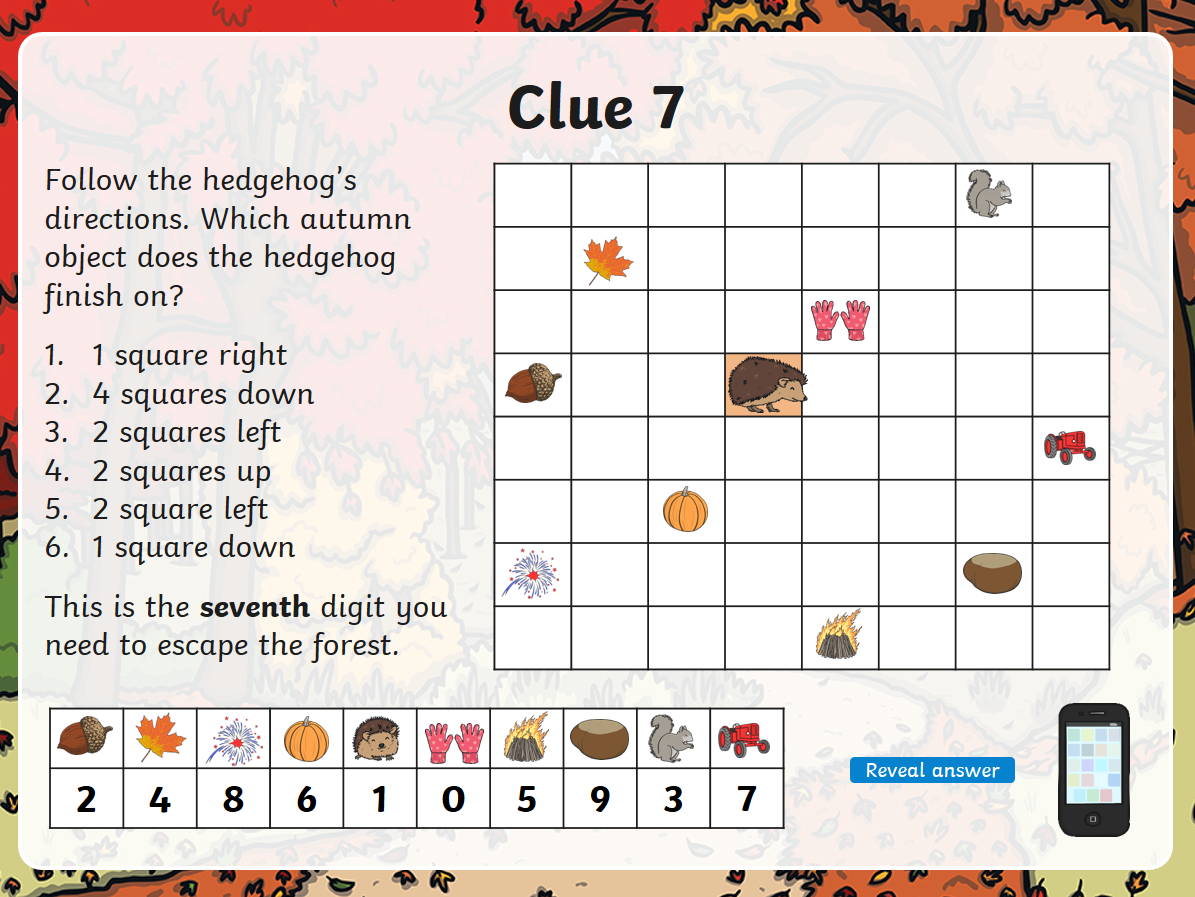
This morning the children took part in a maths morning. They solved a number of puzzles and cracked codes in order to generate an 8 digit passcode which allowed them to ‘escape the forest’ (similar to ‘escape the room’ experiences).
The children used addition and subtraction, pattern finding, routes and codes to solve problems. Each problem generated a single digit answer, which formed part of the passcode. The children worked in twos and had to use teamwork to ensure that they found all 8 digits in the passcode over the course of the morning. Here are some examples of the puzzles and us solving them.


This afternoon we have enjoyed playing maths games, such as Make 10 and Lions and Tigers. We have also enjoyed making our own maths games and books.


During the week, we have been learning to recognise, count and select money. We stated by selecting 4 coins finding the total. We used our previous learning to add efficiently.
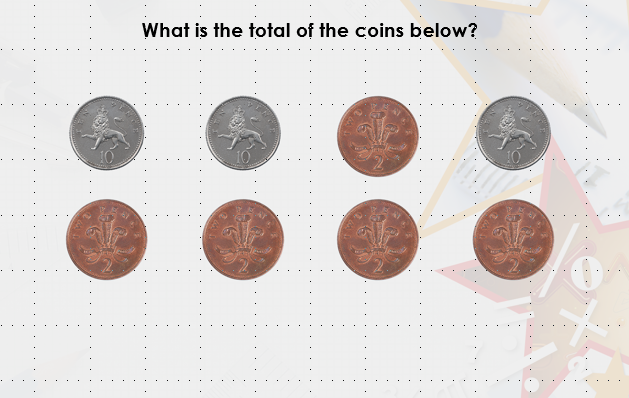


The next day we worked in pairs and selected an item to ‘buy’. We selected the correct value of coins and our partner checked we had used careful counting. We challenged ourselves to make the value using the fewest coins and some of us make the value in different ways.

We recorded this learning the next day when we choose a value and drew a part, part, whole model to represent the coins we could use.


Here are some money questions you could discuss at home: 


Next week we will be comparing different amounts of money and finding the difference between them. We will use this learning to calculate giving change, from values up to £1. Please play with money with your children, helping them to add a selection of coins, make a given value and give change.

This week in English we have been learning about explanation texts.  That is a text that explains how or why something happens. 
On Monday we were given a selection of  explanation texts to look at and think about the features of such texts.  We then talked about what we had found and listed the features.
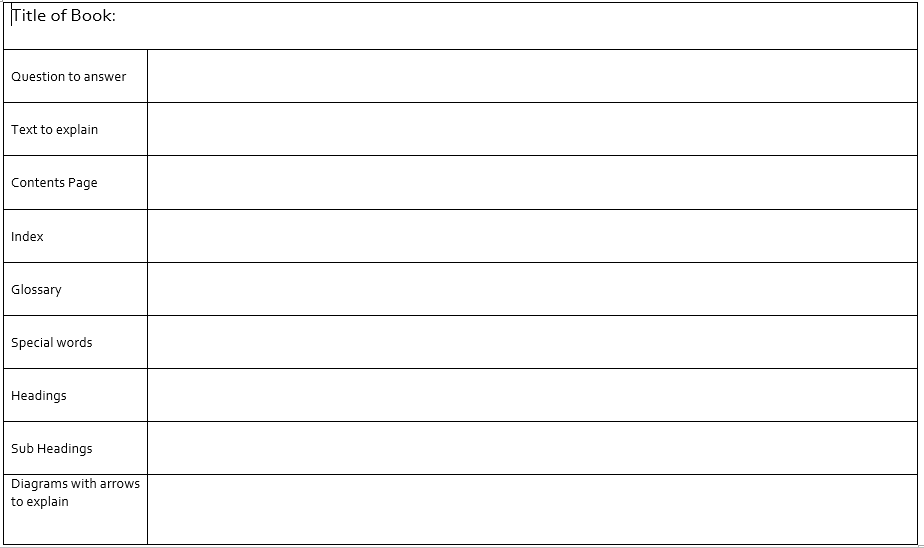
After we read an explanation text as a class called ‘How does water change?’ We looked to see if the book had the same features we had talked about.  After that we were explanation texts detectives and using the sheet below we tried to find evidence of the features in the book we were given.   


At the end of the lesson we talked about how some information can be presented as a flow diagram.
On Tuesday as a class we used a PowerPoint all about evaporation.  We looked at some pictures and talked about what was happening.


We then read a short explanation text  about evaporation and noticed some key words that were used to explain the process. We then tired to create our own flow diagrams to explain the process of evaporation.  We had three sentence starters we could use First….. Then…. After that….
We also thought about specific words we could use.  These included – wet, dry, sun and evaporate.

On Wednesday we had a SpAG lesson.  We revisited our learning about the four types of sentences.
Commands

Exclamations

Questions              

Statements
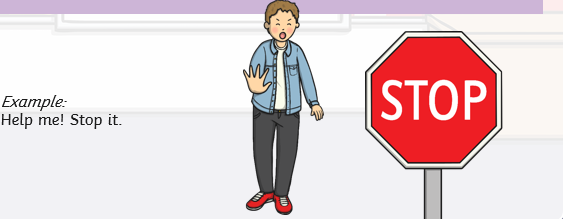
We had to match the sentences to the type of sentence.  After that we wrote our own examples if different sentences and then tried to change one type into another.  Eg I am going to the shop into When will you go to the shop?
Try this activity at home.
On Thursday we used our explanation texts from home with the detective sheet we had used on Monday to see if our texts had those features. 
Over the weekend look at the explanation text your child brought into school and talk about the key features.

Phonics – we have been learning about  

·         the /f/ sound spelt ph eg phone, elephant, trophy, dolphin, phrase

·         the /w/ sound spelt wh at the beginning of words eg when, which, while, where, white, wheel

·         the /r/ sound spelt wr at the beginning of words eg write, written, wrote, wrong, wrap, wreck

·         the /n/ sound spelt kn at the beginning of words eg knock, know, knee, knight, kneel ,knee, knife
and (less often) gn at the beginning of words gnat, gnaw

Make your own sentences up with these words. 

We have been enjoying learning about algorithms and programming using Scratch and Turtle. You might like to help your child continue their learning at home. Here is a link to the website we have been using: 
https://scratch.mit.edu/

We have now given out the parts for the our Christmas play - Santa's On Strike. We have been practising the songs, starting to create the dances and have given out scripts, to  children with speaking parts. We will be giving out costume letters as soon as possible, hopefully this week. Please remember that children will perform in bare feet, and if you have any questions about their costume requirements please speak to us. 

We hope you have a good weekend!

The Year Two Team

(P.S. Sorry for the late publishing of the blog this week, the computers kept freezing on Friday evening!)

We hope you have a good weekend, 


Friday, 15 November 2019

Friday 15th November


This week in maths, we have been continuing our learning about addition and subtraction. We started by subtracting a 1-digit number from a 2-digit number. We used sticks and bricks to partition the first number into tens and ones. We then took the ones away and if we did not have enough one we ‘regrouped’, or ‘exchanged’ one ten for some ones. For example, 62 – 8 does not have enough ones. 62 can be regrouped as 5o (5 tens) and 12 ones. We can then subtract the 8 from the 12 ones, to leave 4 ones, and add to the 5 tens = 54. A picture will explain this more clearly!


We have also done 62 - 8 using a bead string, this time ‘thinking 10’. First we find 62 on the bead string. We know that 8 can be partitioned into 2 and 6. We can subtract the 2 from 62 to make 60, then we need to subtract the other 6. Knowing our number bonds means we know 60 – 6 = 54. We use this same method on a number line.


We then subtracted a 2-digit number from a 2-digit number. Again, we partitioned the number into tens and one and regrouped a ten if we needed more ones. We practised this using tens and ones, bead string and number lines. Here is an example using 73 - 46

Tens and ones:  73 = 6 tens and 13 ones. Subtract 6 ones from 13 = 7ones, then subtract the 4 tens from the 6 ten = 2 tens. We now have 2 tens and 7 ones = 27.


Bead String: Start on 73. We know 46 is 40 + 3 + 3. Take away 3, to reach the next multiple of 10 = 70, take away 40 = 30 (using our number facts), take away the other 3 = 27 (using number facts)

Number line: Start on 73, jump back 3, then 40, then 30.

Please practise subtracting 2-digit numbers from 2-digit numbers at home. You can see that we are using our number facts to be efficient mathematicians, so please practise those if your child is not secure with addition and subtraction facts in 20.

We have also been adding 3, 1-digit numbers. We rolled a dice and made 3 numbers. We then created a calculation using these numbers, putting them in the most efficient order to calculate the total. 


This week in English we have been continuing our learning about writing instructions.
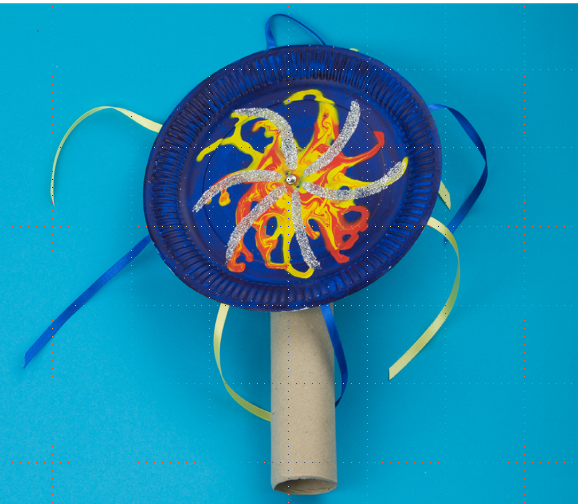
On Monday we followed a set of instructions to make our own Catherine wheel firework.  We had to read each instruction in the correct order to be successful.

On Tuesday we used a planning sheet to plan our instructions.  
We had to remember the features of instructions.
·        Title
·        Numbers each instruction
·        Start each command on a new line
·        Short, clear commands
·        Adverbs
·        Extended commands
On Thursday we wrote our own instructions using our planning sheet and the toolkit above.
We also had to remember to include the non-negotiables.
On Friday we edited our work with our teachers and then had an instruction writing ChIL.

Home learning
This weekend please get your child to carefully follow the instructions to make a rain gauge and a weather vane so next week they can record the weather at home on the weather sheet ready to bring it into school for the science lesson in the week commencing 25th November.
Next week in English we are learning about explanation texts.  This is a text that explain a process of how or why something happens.  If the children could bring an explanation text into school for next Thursday as they will be looking at the features of this text including headings, sub headings, diagrams and vocabulary specific to the subject.
Phonics – we have been learning the j sound represented as
·        dge in fudge, bridge and badge
·        ge in rage, stage, challenge and village
·        g as in gem, magic and giant
You may like to get your child to put some of these words into a sentence.
Spellings – we have been practising One... Once... old, cold, gold, hold.  
This week we didn’t have a handwriting lesson as the Year 5s came down to share their stories as a random act of kindness.


In Geography we were learning about forecasting the weather.  We learnt about the different weather symbols and used our knowledge of places in the UK to present the weather forecast.


Have a great weekend.
 Year Two staff.


Friday, 8 November 2019

Friday 8th November


This week in English we have been learning about the four different types of sentences. They are
1. Statements – sentences which tell you something (a fact). End with a full stop.


 2. Questions – sentences that ask you something. End with a ?


 3. Commands – tell you to do something. Found in instructions. Often urgent or angry and can be very short.


 4. Exclamations – sentences that begin with  ‘what’ or ‘how’ Include a verb. End with a !
We wrote an example of each type of sentence.  Some of us even tried to challenge ourselves to turn one type of sentence into another eg The weather is hot today into What is the weather like today?
You may like to help your child think about the four different sentence types. We would love them to bring their sentences into school to share.
On Tuesday we read and analysed the instructions we brought in from home.  We looked to see if the instructions had certain features.  By the end of the lesson we had noticed that the instructions
·         Had a title
·         List of materials/ingredients/introduction
·         Numbered/sequential steps
·         Start each new sentence on a new line
·         Use short, clear sentence
·         Use direct language – imperative/bossy verbs
·         Use of adverbs
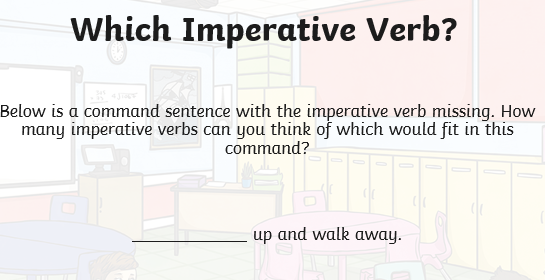
On Wednesday we had a SpAG lesson where we had to identify imperative verbs. 


We used a spinner to make up our own commands.
You may like to try this at home.

Look at the words on the spinner. Can you choose an imperative verb and say or write a command. How many different ways can you use that imperative verb?
On Thursday we worked in pairs to write a set of instructions for our morning routine and on the following day we wrote our own set of instructions for our morning routine.  We tried to include as many of the features we had identified in our lesson on Tuesday.
More ideas for home learning.
This weekend see if you can provide the opportunity for your child to
·         Listen to and follow a series of more complex instructions
·         Read and follow simple sets of instructions such as recipes, plans, constructions which include diagrams
Next week we will be continuing our learning about instructions.
This week in
Phonics – we have been learning the trigraphs and homophones (words that sound the same but are spelt differently) ear as in hear, ear as in pear, are as in care, air as in pair.

Spellings – we have recapped the Year One words – were and was, says and said.  Some strategies the children suggested to help us remember was included it has ‘as’ in and  it is saw backwards. With said you can hear the s at the beginning and the d at the end but you need to remember the tricky bit ai. What strategy does your child use?

We also practised the Year Two words – find, kind, mind and child and children. Learn child and then add ren.
Please keep practising the weekly words on the blog and the Year One common exception words that we sent home before half term as they are personalised for your child.  You will find them in their book bag.  

Handwriting – we practised the robot arm family letters n, m h and wrote the words ham, mend, hand, them.  Use the letterjoin website to practise at home.  The more the children can watch the formation of the letters on the videoclips and have a go at forming the joins for themselves the more fluent their cursive handwriting will become. Remember every letter starts on the line and then leads into the join before the letter is formed and then ends with a hook.


This week in maths, we have been building on our learning about addition and subtraction. We started by adding a 1-digit number to a 2-digit number. We made a list of strategies we could use:


We then moved onto using 2, 2-digit numbers. Here are some examples, using the number sentence 24 + 12.


We can use our head and count on using our fingers, but as the number get bigger, we need to use strategies that are more efficient. These include using our number facts to add the ones and then add the tens.

The next day we subtracted 1-digit numbers from 2-digit numbers. We could count back, but we tried to use our number facts to ensure we were accurate.

We have then been adding 2, 2-digt numbers that ‘cross the tens’, for example, 25 + 17. We can do this using our number facts to add the ones and then the tens, using ‘sticks and bricks’ and using number lines. We have more than ten ones we regroup, or exchange this for one ten. Here are some examples of methods we have used:


 Next week we will be subtracting 2-digit numbers, including ‘crossing the ten’. We will be using our number facts and regrouping then, where needed. Please keep practising number facts with your children as it helps their confidence and accuracy. 

This week in science we went on an Autumn walk.  We collected evidence to prove it was Autumn.  We used our observational skills to look at the trees and plants.  We discussed what differences we would see if it was Winter, Spring or Summmer. You may like to go on an Autumn Walk this weekend and see if you find any different signs of Autumn that we didn’t see in our school grounds.

We hope you have a good weekend and we might see you at the fireworks on Saturday! 

Year Two Team